
Some of our structures can be equipped with stainless steel fittings for an additional fee. Have you ever wondered what that means in practice?
In commercial terms, we distinguish between two “levels” of stainlessness. Here’s how to understand them (based on the marmech.eu website).
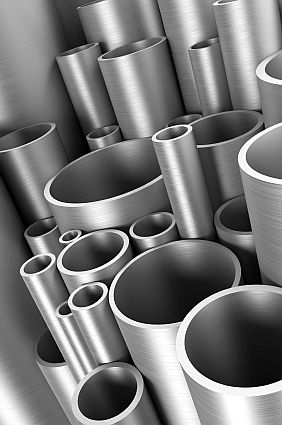
Stainless steel – a general term for a group of corrosion-resistant steels. More specifically, we can divide them into corrosion-resistant steels and acid-resistant steels. Corrosion resistance is achieved by adding appropriate elements—most commonly chromium and nickel—to the base iron alloy.
The most popular types of stainless steel are: 18/10 (18% chromium and 10% nickel) and 304—used in the food industry (cutlery, cookware), chemical industry (systems, pipelines), and medical industry (tools, implants), as well as A2 and A4 steels, which are most commonly used to manufacture fasteners.
"Stainless" screws are made from two grades of steel—A2 and A4—and it should be noted that:
- A2 steel – is a steel with increased corrosion resistance, but not resistant to concentrated acids; in practice, this translates into the fact that a screw made of this type of steel exposed to external conditions (e.g. rain, moisture) will not become rusty, but may undergo chemical corrosion after being poured with acid (e.g. after leakage of electrolyte from the battery);
- A4 steel – is an acid-resistant steel that resists the action of concentrated acids such as sulfuric, phosphoric, acetic, etc. – hence its widespread use in the chemical industry.