
FROM CONCEPT TO A FUNCTIONING MAST
Frequently asked questions
Answers organized in the order in which customers ask them at each stage of the project.
Selection of a Design
Mast or tower: height and stiffness, and what causes the price differences.
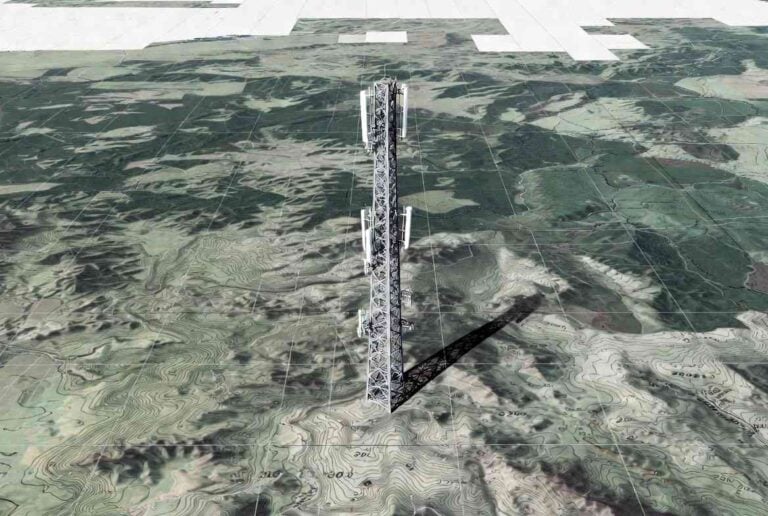
I'm starting a mast-building project—what do you need to know to help me?
The construction of telecommunications towers and masts is a highly specialized field. In Poland, only a dozen or so companies carry out this work independently, while several dozen others operate by subcontracting to the actual manufacturers.…
Read the answer →
What to choose - mast or tower?
The main difference between masts and towers is ease of use and the amount of space required for installation. There is also an important economic factor: towers are generally more expensive, but they take up…
Read the answer →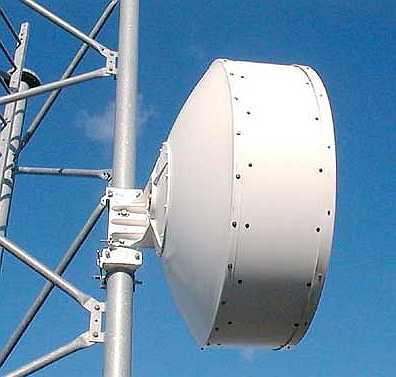
How do I choose the right type of mast or tower for my antenna array?
Both masts and towers are highly resistant to vertical loads. Customers often ask us whether a mast can support a specific amount of equipment (expressed in kilograms)....
Read the answer →
How to choose the height of a mast or tower to suit our needs (the case of a radio link)?
In telecommunications, the optimal placement of antennas is determined by Fresnel zones, which ensure that there are no obstacles within their range and minimize energy loss.
Read the answer →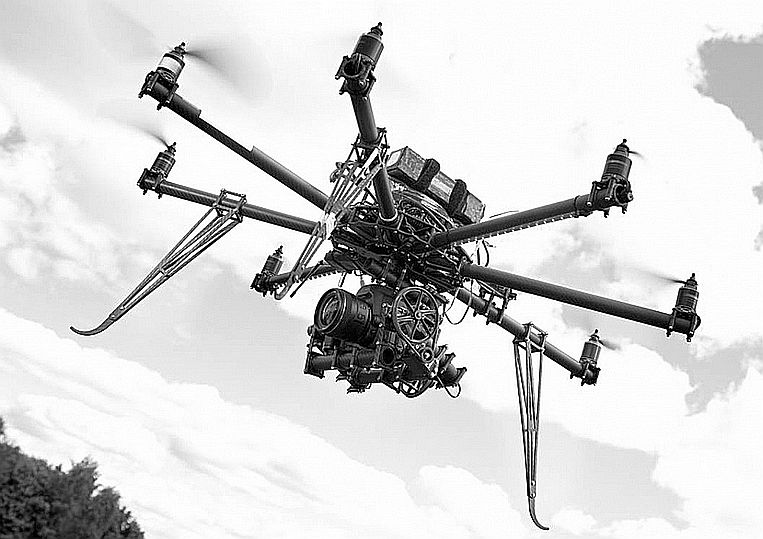
Optimization of the height of masts for the radio link.
Designing a microwave link requires ensuring line of sight between antennas and the presence of an unobstructed Fresnel zone. Elevation maps, drones, and weather balloons are used for field verification. Price…
Read the answer →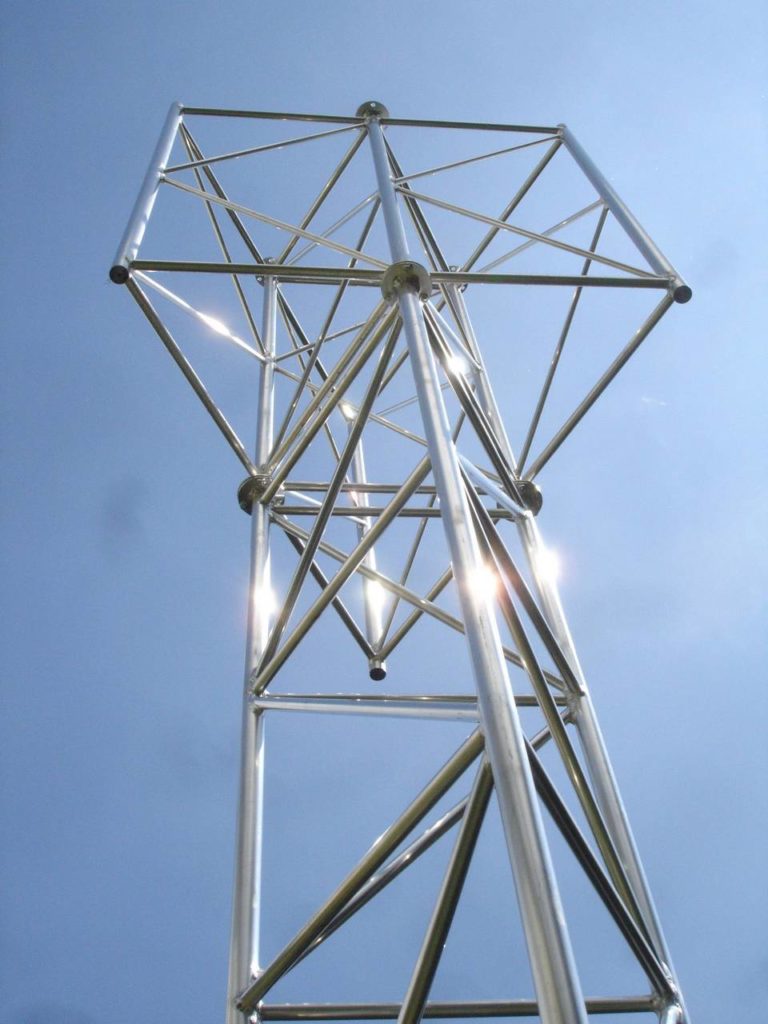
Are there any antennas for which the stiffness of the mast structure is of particular importance?
Yes—these are primarily all types of radio links and satellite links, characterized by a focused, directional transmission beam. With a standard deviation from the vertical of 1:100…
Read the answer →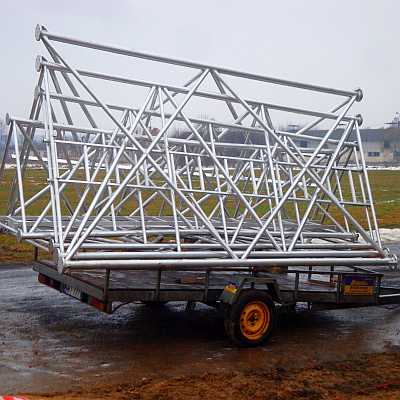
Folded or welded tower?
Large telecommunications towers pose logistical challenges during delivery—their lower segments are three-dimensional structures with cross-sections up to several meters wide. Most of the towers available on the market…
Read the answer →
What makes some masts more expensive and others cheaper, where does the price come from?
The price of a mast is determined by three main factors: the cost of materials, production time, and the quality of workmanship. At AluPro, we prioritize the highest quality—we don’t aim to be…
Read the answer →Paperwork
Building permits, notifications, signage, and building loads.

Does the mast require a building permit?
Masts under 3 meters do not require a permit. Masts over 3 meters on buildings must be reported, unless local regulations require a building permit.
Read the answer →
The county office is waiting for a building permit for a mast on the building—is it right to do so?
Updated: September 2026 · Legal status: August 2026 It depends on the height of the structure and whether the installation interferes with the building’s structure. The old ruling we cited…
Read the answer →
Do I have to report radio wave emissions to some department (e.g. environment)?
Updated: September 2026 · Legal status: August 2026 Short answer: Not to the Department of the Environment. To the county administrator—yes, if the installation’s EIRP is 15 W or more.…
Read the answer →
Do I have to paint my flagpole in red and white stripes?
Updated: September 2026 · Legal status: August 2026 The marking of a mast—including its paint scheme and lights—is governed by regulations on aviation obstacles, not by its height alone…
Read the answer →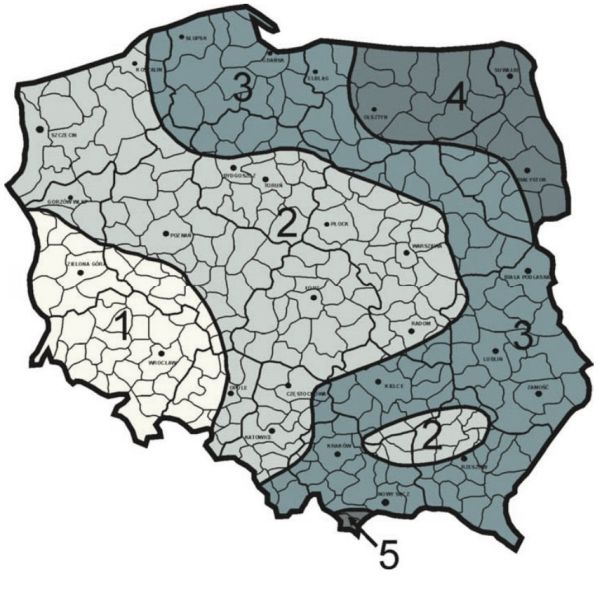
Reactions to building structure – what should I know?
Customers often wonder why the mast mounting system is more expensive than the mast itself. The values for the pull-out and driving forces into the roof, as cited in the structural calculations, show just how important…
Read the answer →Foundation and Installation
Foundations, anchors, guy wires, lightning protection, and safe antenna installation.
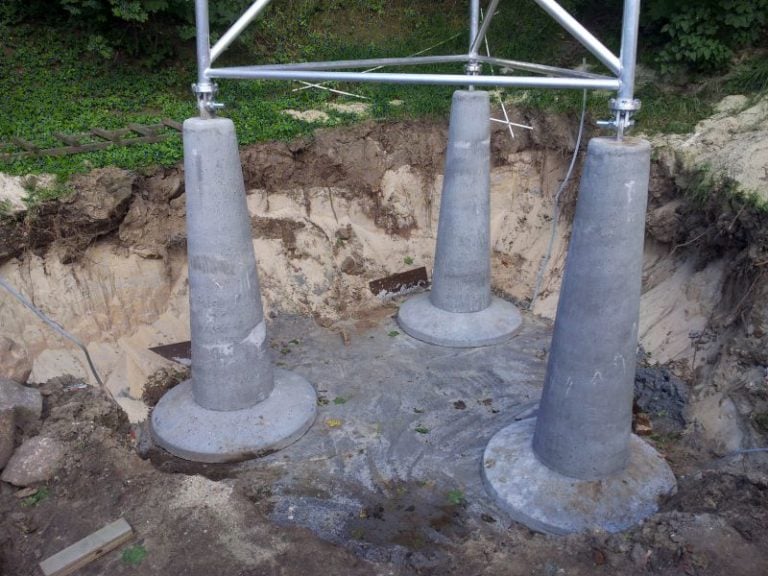
I am putting a mast/tower on the ground – how should I foundation it?
The general rule is that a foundation should not extend below the groundwater level. If the groundwater table is shallow, a foundation slab weighted down with an earth fill is most commonly used…
Read the answer →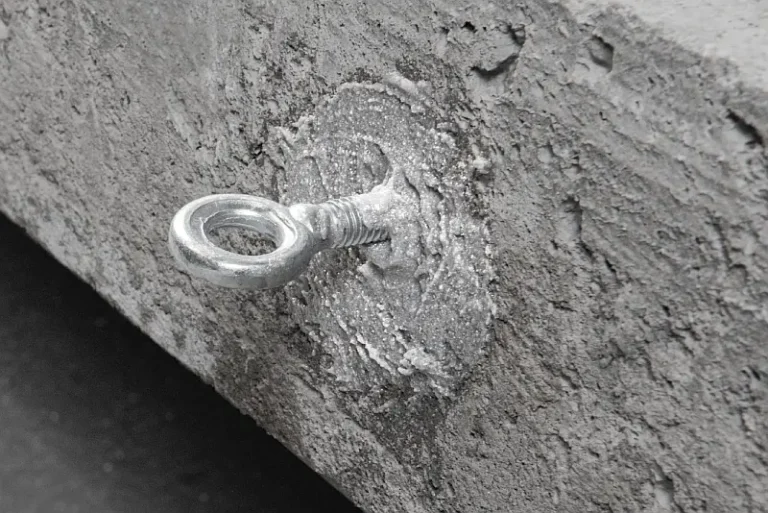
Assembly for chemical anchors - description of the technique
Most of our wall-mounted masts are installed using chemical anchors and threaded rods. This is a very convenient and durable method, though it is susceptible to installation errors. Reactions to…
Read the answer →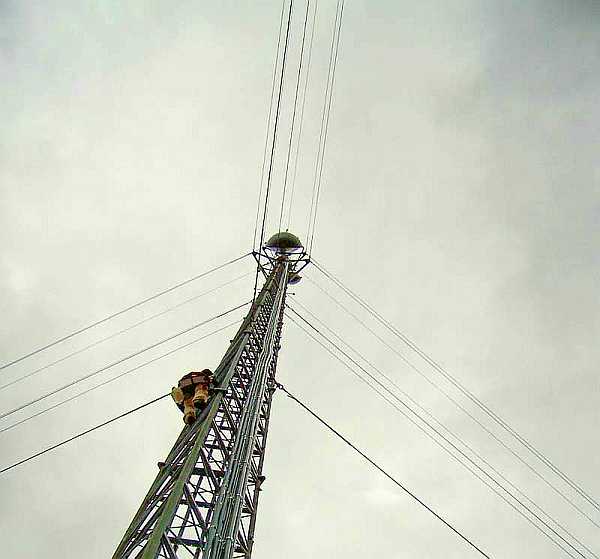
How to properly arrange mast guy wires?
As a general rule, guy wires should be spaced symmetrically—on three-curb poles, every 120° in the horizontal plane. As for the distance between the anchor point and the pole’s axis…
Read the answer →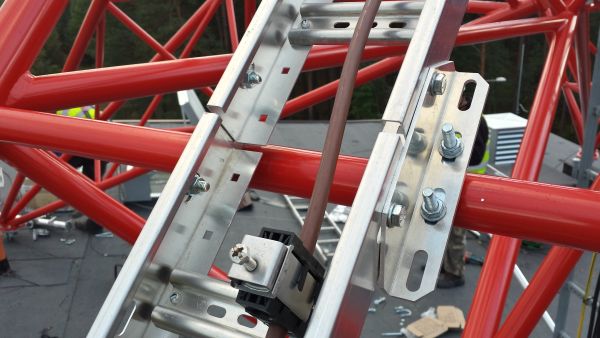
How to safely lightning a mast? Basic knowledge.
When it comes to lightning protection for telecommunications towers, there are three main considerations to keep in mind. In our opinion, the best and most cost-effective way to dissipate electrical charge is through the tower structure itself…
Read the answer →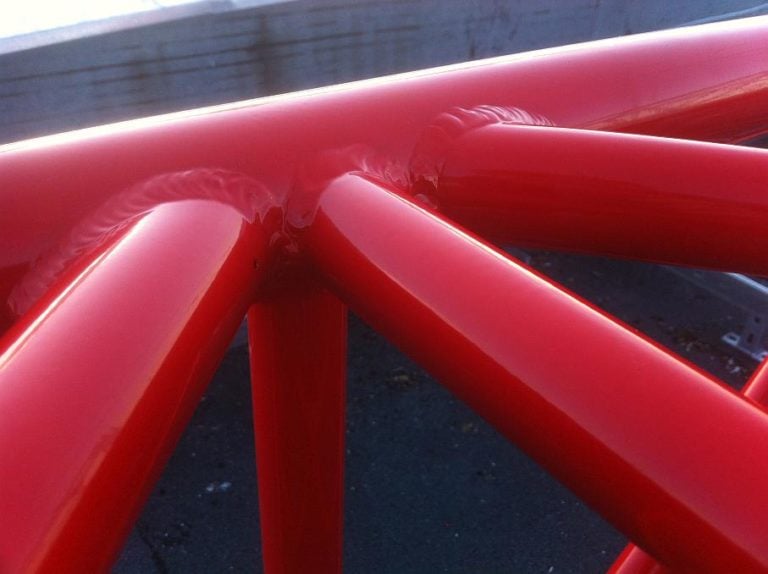
How do you safely install antennas on a mast?
A telecommunications tower, like any truss, has nodes that are its strongest points. It is best to apply any forces in the vicinity of these nodes, as this minimizes the risk of localized…
Read the answer →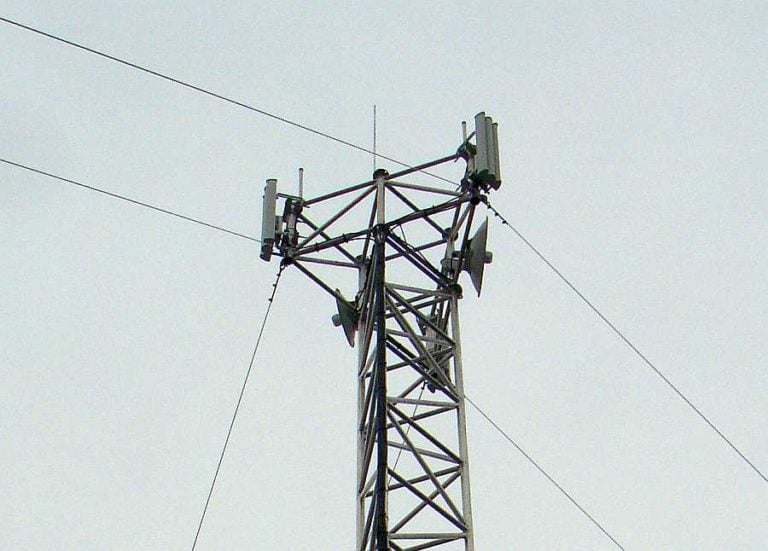
What is a separation crown used for?
A separation ring serves two purposes. The first is to physically separate transmitting antennas—such as sector antennas—from one another. These antennas emit back radiation, which can lead to…
Read the answer →Material and Quality
Aluminum welding, stainless steel, screws, and freeze resistance.
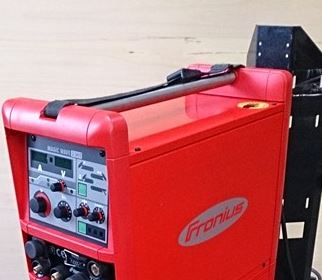
How does aluminum welding technique affect weld strength?
The quality of the weld is crucial to the product’s safety. At AluPro, we weld aluminum exclusively using the TIG method, with Fronius and Kemppi machines. TIG welding is a slow process, but…
Read the answer →
Stainless Steel – What Types?
Some of our structures can be equipped with stainless steel fittings for an additional fee. Have you ever wondered what that means in practice? From a commercial standpoint, we distinguish between two “levels” of stainless steel. Here are…
Read the answer →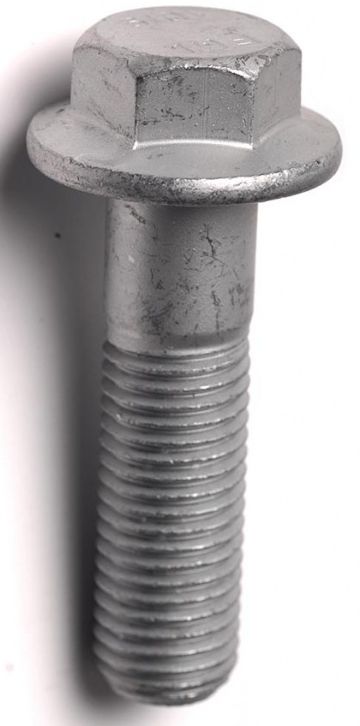
Screw Classes – how to understand them and why are they important?
In the mast industry, flange connections are standardized based on bolt grades, which determine their tensile strength and ductility. Bolt grading, denoted by two-digit symbols, indicates…
Read the answer →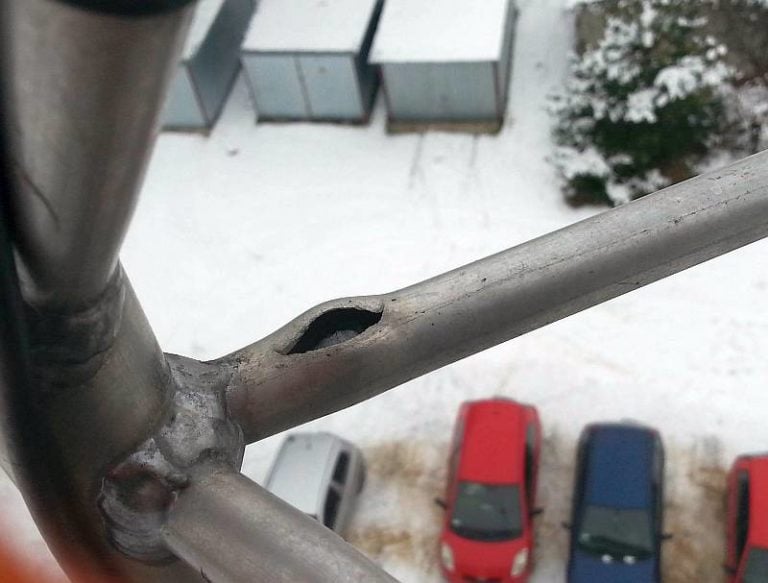
How to avoid frost cracks and their consequences?
AluPro poles come with a lifetime warranty against frost cracking, a problem that often makes it necessary to replace the pole. A special drainage system and markings on the poles minimize the risk of damage, and…
Read the answer →Operation and Updates
Service, safe work at heights, and our latest projects.

Mast and Tower Servicing – What Should I Know?
Radio masts and towers require regular inspection and maintenance to prevent malfunctions and life-threatening situations. Aluminum masts are corrosion-resistant but susceptible to frost cracking.…
Read the answer →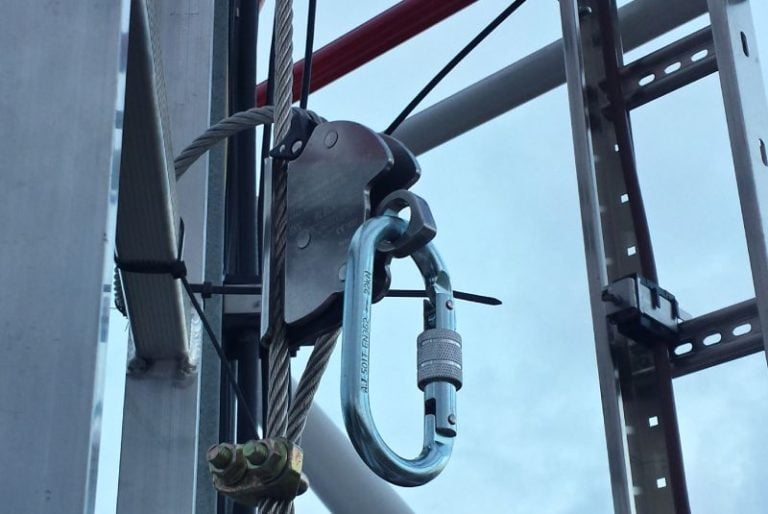
Anti-fall system – what is it and how does it work?
Working on towers and masts can be dangerous. Manufacturers’ recommendations are clear: do not work at heights when wind speeds exceed 5 m/s. This is helpful on a day-to-day basis…
Read the answer →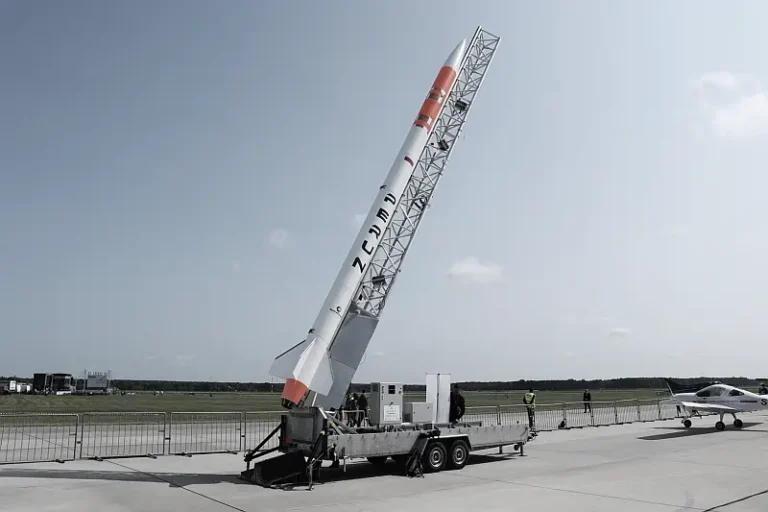
Cooperation with SpaceForest
In 2019, we entered into an interesting partnership with SpaceForest, a company that was just getting started at the time. Based on their in-house design, we built—in line with our area of expertise—a rocket launch pad truss…
Read the answer →Nothing matches your search. Contact us directly →