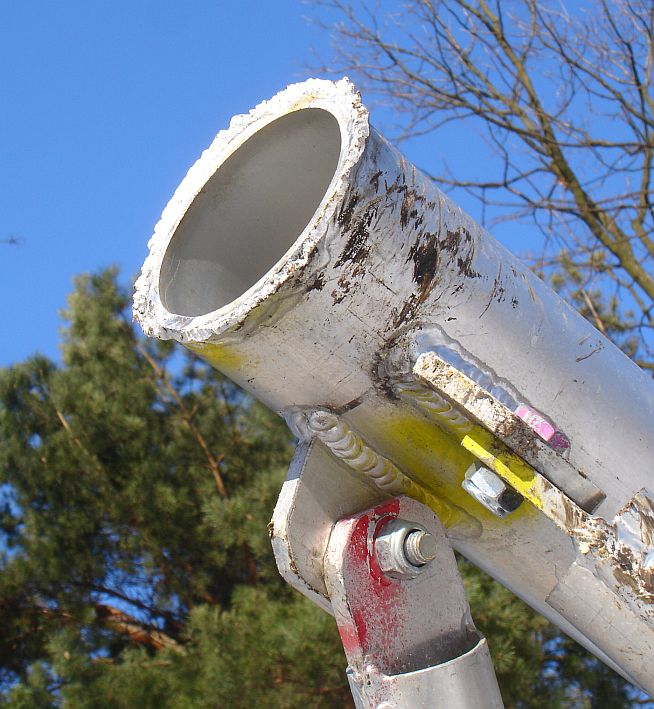

The price of a mast is determined by three main factors: material cost, production time, and the quality of workmanship. At AluPro, we prioritize the highest quality—we do not strive to be the cheapest on the market at the expense of workmanship and safety.
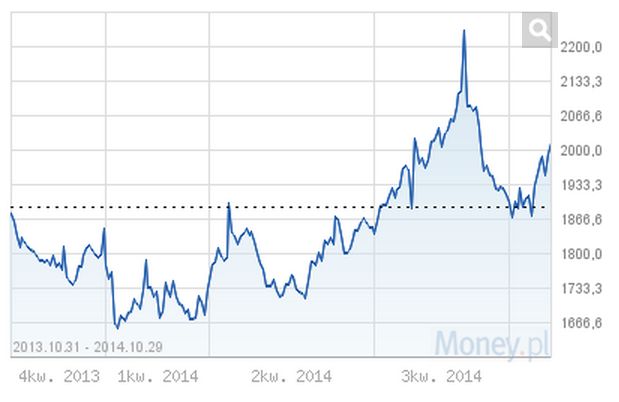
The cost of aluminum—the primary construction material used in AluPro—is subject to rapid fluctuations. In just one year, the wholesale price of the material rose by nearly 22%, which was reflected in the prices of finished products. Depending on their stock of raw materials purchased at earlier prices, individual companies update their price lists more quickly or more slowly—which is one of the reasons for price discrepancies in the market.
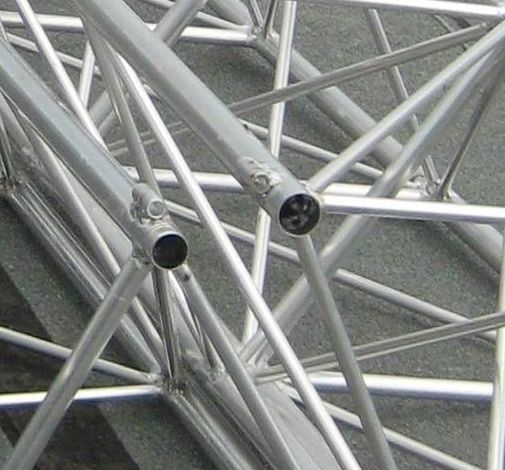
Another important factor is material consumption. Some companies manufacture trusses using, among other things, 1-mm-wall tubes, which are unable to support the weight of a service technician climbing the structure. To get around this problem, they reinforce one of the truss walls with a lattice made of 1.5-mm tubes. This solution makes the structure lighter but less safe—all it takes is for a service technician to mistake the walls or try to go around an obstacle (such as an antenna mount) to find themselves in a dangerous situation. Thin-walled tubes also negatively affect rigidity, especially in tower-type structures. At AluPro, the thinnest material approved for production is 1.5 mm-walled tubing; we also use 2 mm and 3 mm profiles.
The second cost factor is time—and we don’t skimp on it when it comes to ensuring quality workmanship. All AluPro masts and towers are equipped with flanged connections, which is not standard in the industry. This solution ensures greater safety and significantly easier assembly, although the fabrication and welding of the flanges require additional time and material. The more common slip-fit connection has several serious drawbacks: difficult installation (zero tolerance for manufacturing deviations), a tendency to jam (making disassembly difficult or impossible), and safety risks. A pipe that has been pushed in may crack longitudinally due to pressure and stresses caused by its own weight, the weight of the technician, and the tension of the rigging—and from there, it’s only a short step to the mast toppling over.
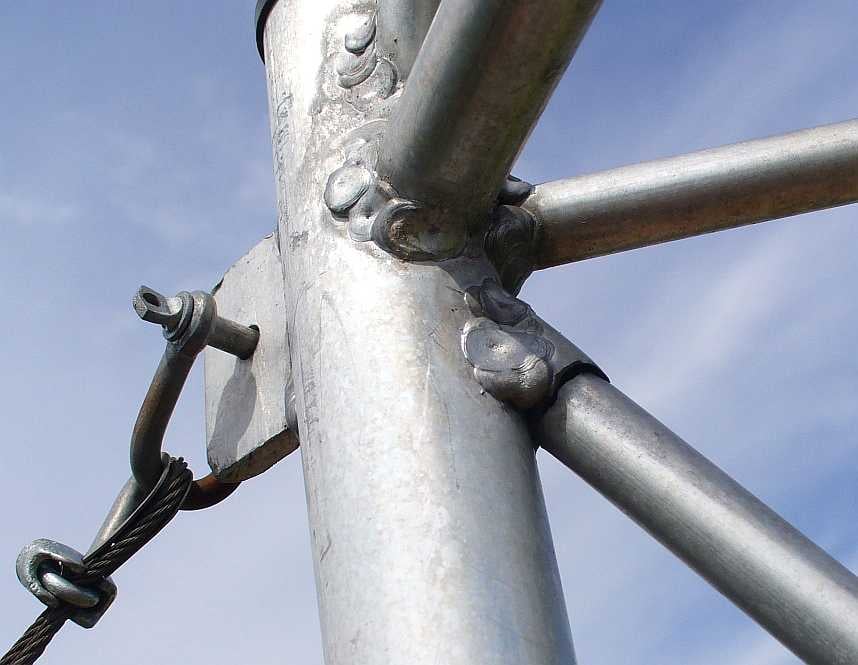
Time is closely linked to the quality of workmanship. We employ experienced welders and do not rush them while they work—we allow them to weld carefully, with deep penetration, and we check that the welds are leak-free and properly closed. Some of our competitors weld exclusively from the outside of the truss: such welds are produced faster and more cheaply (requiring less time, welding gas, and wire), but they are half as strong. Aluminum welding is a demanding process—achieving the proper penetration and an aesthetically pleasing weld requires true mastery. Inexperienced welders working under time pressure can lead to consequences that are nothing short of catastrophic.