
guide
-
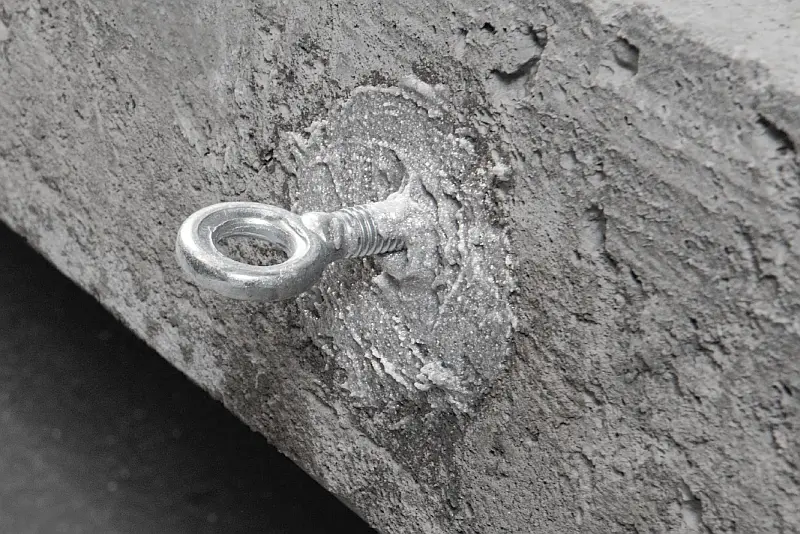
Assembly for chemical anchors - description of the technique
Read more: Assembly for chemical anchors - description of the technique.Most of our wall-mounted masts are installed using chemical anchors and threaded rods. This is a very convenient and durable method, though it is sensitive to installation errors. The forces acting on the bolts—especially for taller and more heavily loaded masts—can reach values measured in metric tons, so the quality of the mounting is crucial. General note: if you are not a professional installer…
-

Reactions to building structure – what should I know?
Read more: Reactions to the building structure – what should I know?Customers often wonder why the mast mount is more expensive than the mast itself. The values of the pulling and driving forces in the roof quoted in the static calculations show how important proper anchoring is, which often requires serious construction works and specialized solutions, individually tailored to each building.
-
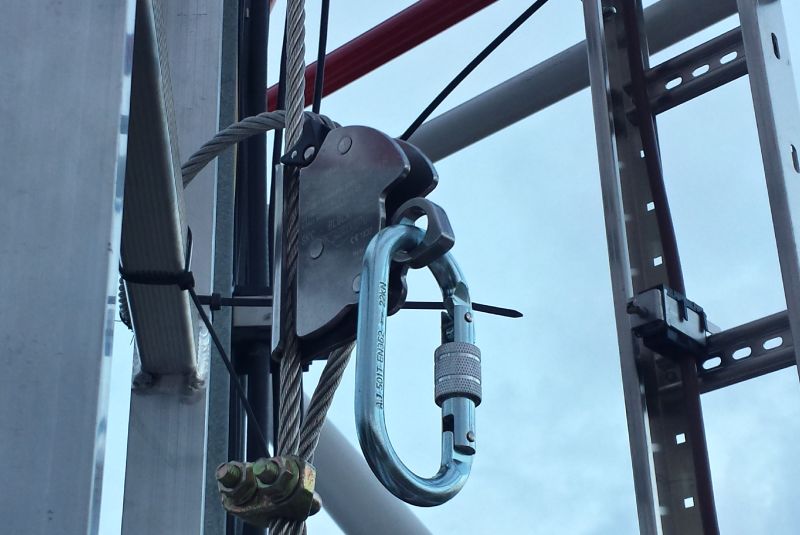
Anti-fall system – what is it and how does it work?
Read more: Anti-fall system – what is it and how does it work?Working on towers and masts can be dangerous. Manufacturers’ recommendations are clear: work at heights should not be performed when wind speeds exceed 5 m/s. Safety harnesses or mountaineering harnesses are helpful in everyday work—they significantly increase safety, albeit at the expense of comfort. Changing position on a mast is particularly cumbersome: every step requires repositioning the lanyard, which in practice leads even experienced…
-
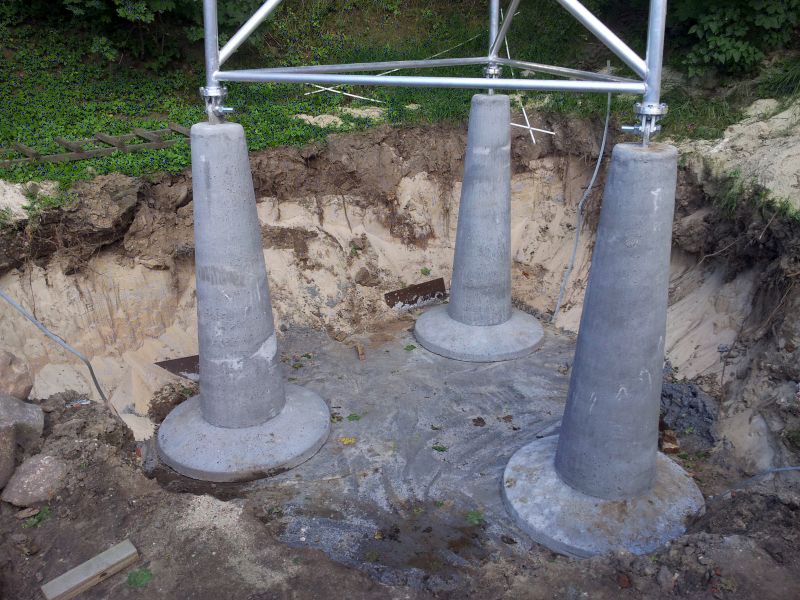
I'm putting the mast/tower on the ground - how should I foundation it?
Read more: I'm putting a mast/tower on the ground - how should I foundation it?The general rule is that a foundation should not extend below the groundwater level. If the groundwater table is shallow, the most common solution is a foundation slab weighted down with earth fill or shallowly buried precast elements (so-called “mushrooms” from the F series, e.g., those manufactured by Elbud Gdańsk). Cast-in-place slabs are also used in mountainous areas, where just below the ground surface there are…
-
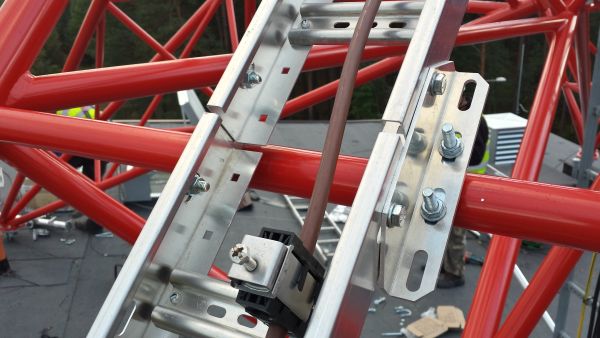
How to remove lightning from a mast safely? Basic knowledge.
Read more: How to remove lightning from a mast safely? Basic knowledge.When installing lightning protection for telecommunications masts, three main issues must be taken into account. In our opinion, the best and most cost-effective way to dissipate the electrical charge is through the structure of the mast or lattice tower itself. AluPro products are equipped with a special eyelet in the lowest segment, which allows the entire structure to be connected to the building’s lightning protection system. For painted structures, be sure to remove…
-

Mast and tower service – what should I know?
Read more: Mast and tower service – what should I know?Radio masts and towers require regular inspection and maintenance to prevent breakdowns and life-threatening incidents. Aluminum masts are resistant to corrosion, but susceptible to frost cracking. The condition of guy ropes and rope tension should be checked, and regular anti-corrosion inspections of steel structures are necessary.
-
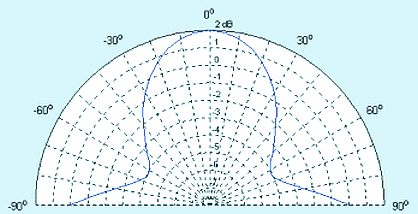
Do I have to report radio wave emissions to any department (e.g. environment)?
Read more: Do I have to report radio wave emissions to some department (e.g. environment)?Updated: September 2026 · Legal status: August 2026 Short answer: Not to the environmental department. To the county administrator—yes, if the installation’s EIRP is 15 W or more. And this is a completely different requirement than the one discussed a few years ago. What has changed? Until June 2022, radio communication, radio navigation, and radar installations were listed…
-

Do I have to paint my mast with red and white stripes?
Read more: Do I have to paint my mast with red and white stripes?Updated: September 2026 · Legal status: August 2026 The marking of a mast—including its paint scheme and lights—is determined by regulations governing aviation obstacles, not by its height alone, regardless of its location. A previous version of this post cited a 2003 regulation that has since been repealed; the thresholds we listed there are no longer in effect. When a mast is an obstacle…
-
The county office is waiting for a building permit for a mast on the building—is it right to do so?
Read more: The county office is waiting for a building permit for a mast on the building—is it right to do so?Updated: September 2026 · Legal status: August 2026 It depends on the height of the structure and whether the installation interferes with the building’s structure. The old ruling we cited here (Provincial Administrative Court in Gdańsk, II SA/Gd 329/14) was based on a numbering system for the provisions that is no longer in effect following the 2020 amendment—which is why we are describing the current situation.…
-

Does the mast require a building permit?
Read more: Does the mast require a building permit?Masts below 3 meters do not require a permit. Masts over 3 meters on buildings are subject to notification unless local regulations require a building permit.
Latest questions and answers
- I'm starting a mast-building project—what do you need to know to help me?
- Cooperation with SpaceForest
- Assembly for chemical anchors - description of the technique
- How to avoid frost cracks and their consequences?
- Optimization of the height of masts for a radio link.
Question categories
- Prices (1)
- For architects (9)
- Stage Structures (3)
- Materials science (6)
- Metallurgy (5)
- New in production (2)
- Law (4)
- Questions & Answers (23)
- Radio communication (5)
- Technologies (15)