
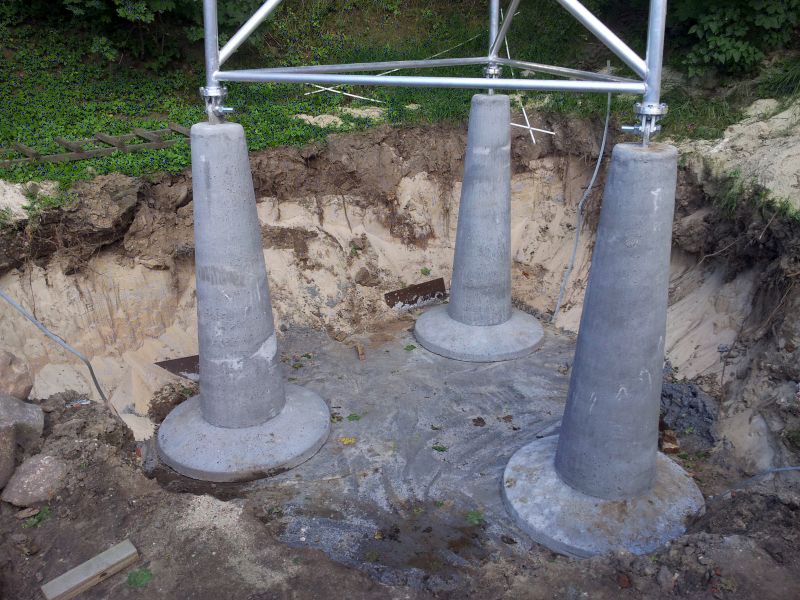

Choosing a foundation method is one of the key considerations in tower construction—important both in terms of cost and construction schedule. This decision often rests with the designer; however, depending on soil conditions, there may be several options to choose from. It is therefore worth knowing the basic solutions.
The foundation method depends on:
- Soil type
- Groundwater depths
- The size/weight of the structure to be built on the foundation
The main options available are:
The general rule is that a foundation should not extend below the groundwater level. If the groundwater table is shallow, the most common solution is a foundation slab weighted down with earth fill or shallowly buried precast elements (so-called “mushrooms” from the F series, e.g., those manufactured by Elbud Gdańsk).
Cast slabs are also used in mountainous areas where bedrock lies just below the surface, and the cost of breaking it up would be disproportionate to the cost of an alternative solution.
The main advantage of precast foundations is their attractive price compared to reinforced concrete slabs, the relatively low labor intensity of installation, and a significant acceleration of the project’s completion. The main disadvantage of cast-in-place foundations, however, is the time required for the concrete to reach the required strength—depending on the ambient temperature, this takes about a month after pouring. The crew must therefore divide the work into several trips. In the case of precast elements—provided everything has been properly prepared—a single visit is sufficient (though it may sometimes take several days).
Clayey and plastic soils always require replacement—regardless of the foundation method chosen. For precast foundations (mushroom-shaped footings), a dry concrete screed must be laid, precisely leveled using a spirit level—using a technique similar to that used for interior screeds.
Ground screws are a modern approach to foundation construction. They work well for smaller structures—especially towers up to a dozen or so meters tall on cohesive soils. Their use eliminates the need for an excavator, which is a particular advantage in hard-to-reach areas (e.g., mountainous regions). Installation is quick—a two-meter screw can be installed in about 30 minutes—and well-tested, although most of the experience comes from outside Poland.