
guide
-
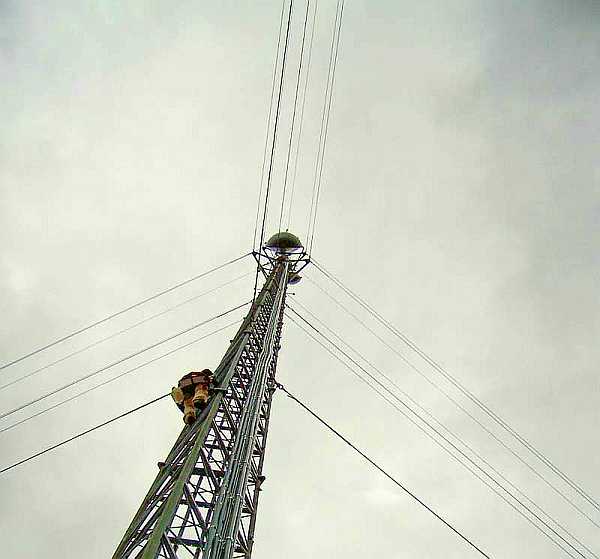
How to properly arrange mast guy wires?
Read more: How to properly arrange the mast guy wires?The general rule is that guy wires should be arranged symmetrically—in three-cord masts, every 120° in the horizontal plane. As for the distance of the anchor point from the mast axis in the horizontal plane, it is assumed that it cannot be less than half the height of the mast. For example, for a 50-meter mast, the anchor point for the guy wires should be no closer than 25…
-

How do you safely install antennas on a mast?
Read more: How can I safely install antennas on a mast?A telecommunications tower, like any truss, has node points that are its strongest areas. It is best to apply any forces in the vicinity of these points, as this minimizes the risk of localized damage to the structure. This is important in practice when installing additional guy wires, securing ropes during the rotational erection of a tower, and when selecting anchor points for antenna booms. A node is a point…
-
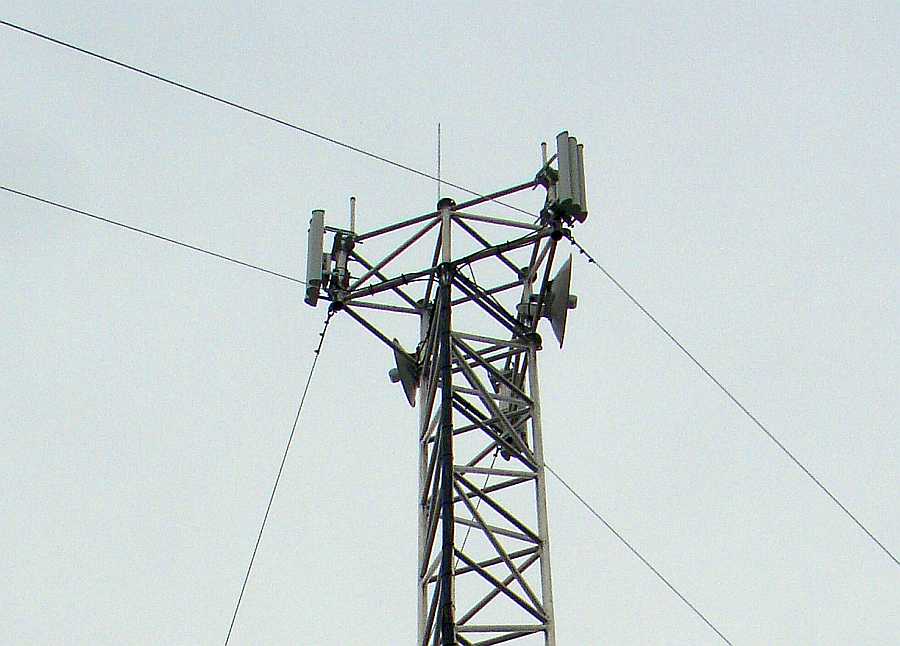
What is a separation crown used for?
Read more: What is a separation crown used for?The separation ring serves two purposes. The first is to physically separate the transmitting antennas—such as sector antennas—from one another. Antennas emit back radiation, which can lead to interference and signal disruption. Since the strength of the electromagnetic field decreases with the square of the distance, even a small separation significantly reduces the mutual interference between antennas. It is worth checking the device specifications to determine the minimum…
-

What makes some masts more expensive and others cheaper, where does the price come from?
Read more: What makes some masts more expensive and others cheaper, where does the price come from?The price of a mast is determined by three main factors: material cost, production time, and the quality of workmanship. At AluPro, we prioritize the highest quality—we do not strive to be the cheapest on the market at the expense of workmanship and safety. The cost of aluminum—the primary structural material used at AluPro—is subject to dynamic changes. In just one year, the wholesale price of the material has risen…
-

What to choose – mast or tower?
Read more: What to choose – mast or tower?The main difference between masts and towers is ease of use and the amount of space required for installation. There is also an important economic aspect: towers are generally more expensive but take up significantly less space—while masts are cheaper but require a plot large enough to accommodate the entire guy wire system. Masts require periodic inspections and checks of the cable tension, and in the event that…
Latest Questions and Answers
- I'm starting a mast-building project—what do you need to know to help me?
- Cooperation with SpaceForest
- Assembly for chemical anchors - description of the technique
- How to avoid frost cracks and their consequences?
- Optimization of the height of masts for the radio link.
Question Categories
- Prices (1)
- For architects (9)
- Stage Constructions (3)
- Materials science (6)
- Metallurgy (5)
- What's new in production (2)
- Law (4)
- Questions and Answers (23)
- Radio communication (5)
- Technologie (15)