
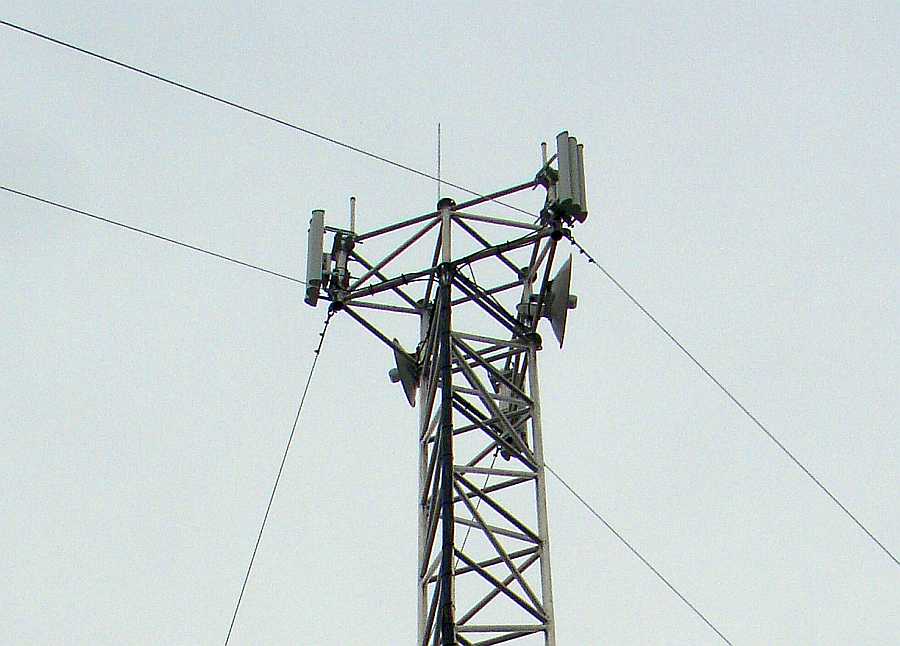
The separation ring serves two purposes. The first is to physically space the transmitting antennas—such as sector antennas—apart from one another. Antennas emit back radiation, which can lead to interference and signal disruption. Since the strength of the electromagnetic field decreases with the square of the distance, even a small separation significantly reduces the mutual interference between antennas. It is worth checking the device specifications to determine the minimum separation recommended by the manufacturer.
The second function of the separation crown is to increase the mast’s torsional stiffness—which is achieved by installing an additional set of guy wires. Antenna masts exhibit high resistance to vertical forces, moderate resistance to lateral forces (thanks to guy wires), and relatively low resistance to torsion, as conventional rigging counteracts this only slightly. Torsional forces can be a problem during strong winds or when performing maintenance work on the mast. This is particularly problematic for radio links, which may lose alignment with each other as a result of the mast rotating. The separation crown significantly improves this situation.