
admin
-
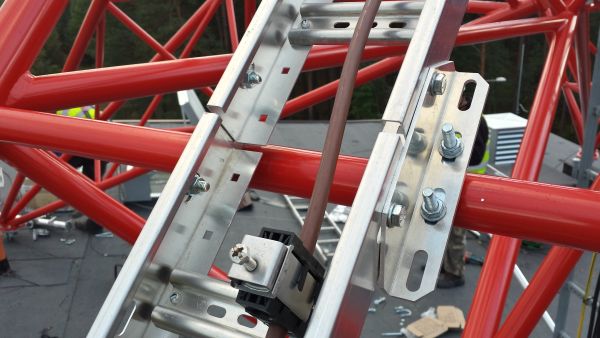
How to safely lightning a mast? Basic knowledge.
Read more: How to safely lightning a mast? Basic knowledge.When installing lightning protection for telecommunications masts, three main issues must be taken into account. In our opinion, the best and most cost-effective way to dissipate the electrical charge is through the structure of the mast or lattice tower itself. AluPro products are equipped with a special eyelet in the lowest segment, which allows the entire structure to be connected to the building’s lightning protection system. For painted structures, be sure to remove…
-

Mast and Tower Servicing – What Should I Know?
Read more: Mast and Tower Servicing – What Should I Know?Radio masts and towers require regular inspection and maintenance to prevent failures and life-threatening situations. Aluminum masts are corrosion-resistant but susceptible to frost cracking. The condition of guy wires and rope tension should be checked, and regular anti-corrosion inspections of steel structures are also necessary.
-
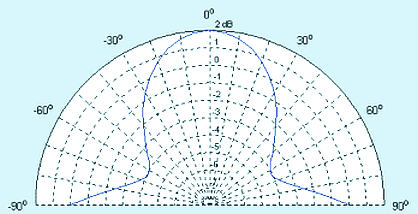
Do I have to report radio wave emissions to some department (e.g. environment)?
Read more: Do I have to report radio wave emissions to any department (e.g. environment)?Setting aside the issue of licenses for specific frequency bands, it is worth noting the issue of electromagnetic radiation in the context of its environmental impact. Current regulations allow for power emissions of up to 15 W per antenna without the need to report this to the Department of Environmental Protection—in such cases, the installation is not considered a project with a significant environmental impact.
-

Do I have to paint my flagpole in red and white stripes?
Read more: Do I have to paint my flagpole in red and white stripes?Regardless of the mast’s location (on the ground or on a building), structures under 50 meters in height do not require notification to the competent military aviation oversight authority (for civil aviation, this threshold is 100 meters). The legal basis is the Regulation of the Minister of Infrastructure of June 25, 2003, on the procedure for reporting and marking aviation obstacles (Journal of Laws No. 130, item …
-
In my area, the District Office expects PnB in relation to the mast on the building – is it right?
Read more: In my area, the District Office expects PnB in relation to the mast on the building – is it right?There is much to suggest that this is not the case. Judgment II SA/Gd 329/14, issued by the Provincial Administrative Court in Gdańsk, is currently in force. In the reasoning for the appellate judgment in this case (i.e., a building permit for a mast on a building), the Court cited Article 29(2)(15) of the Construction Law, as well as Article 30(…
-

Does a radio mast require a building permit?
Read more: Does a radio mast require a building permit?Masts under 3 metres do not require a permit. Masts over 3 metres on buildings are subject to notification unless local regulations require a building permit.
-
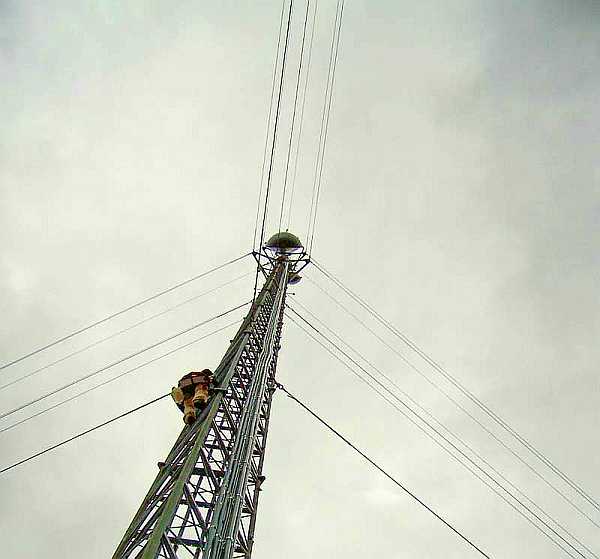
How to properly arrange mast guy wires?
Read more: How to properly arrange the mast guy wires?The general rule is that guy wires should be arranged symmetrically—in three-cord masts, every 120° in the horizontal plane. As for the distance of the anchor point from the mast axis in the horizontal plane, it is assumed that it cannot be less than half the height of the mast. For example, for a 50-meter mast, the anchor point for the guy wires should be no closer than 25…
-

How do you safely install antennas on a mast?
Read more: How can I safely install antennas on a mast?A telecommunications tower, like any truss, has node points that are its strongest areas. It is best to apply any forces in the vicinity of these points, as this minimizes the risk of localized damage to the structure. This is important in practice when installing additional guy wires, securing ropes during the rotational erection of a tower, and when selecting anchor points for antenna booms. A node is a point…
-
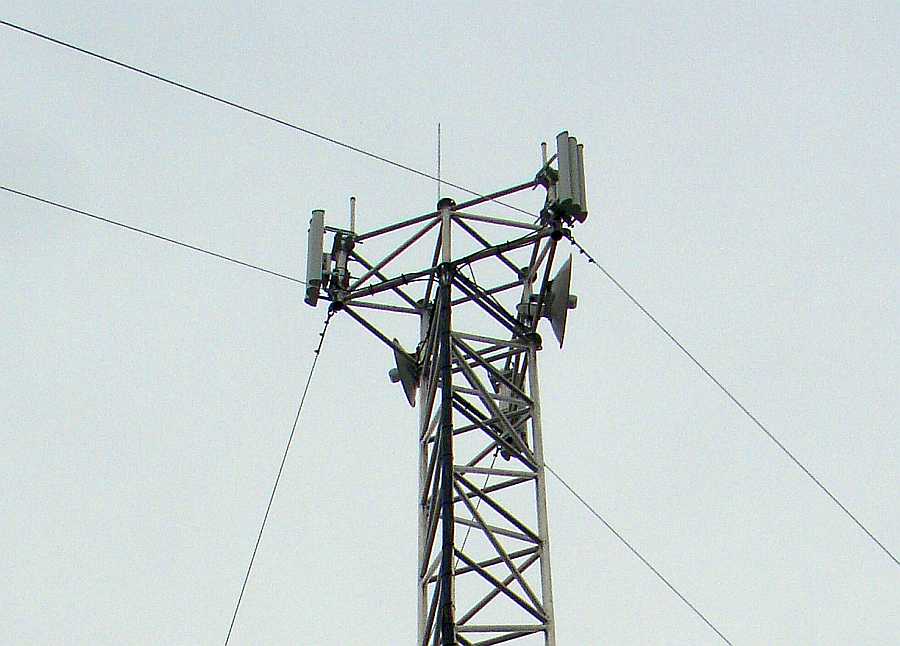
What is a separation crown used for?
Read more: What is a separation crown used for?The separation ring serves two purposes. The first is to physically separate the transmitting antennas—such as sector antennas—from one another. Antennas emit back radiation, which can lead to interference and signal disruption. Since the strength of the electromagnetic field decreases with the square of the distance, even a small separation significantly reduces the mutual interference between antennas. It is worth checking the device specifications to determine the minimum…
-
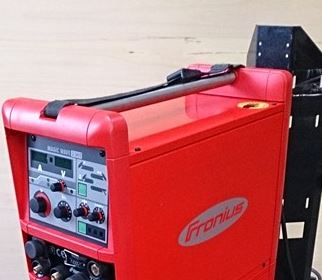
How does aluminum welding technique affect weld strength?
Read more: How does aluminum welding technique affect weld strength?The quality of the weld is crucial to the safety of the product. At AluPro, we weld aluminum exclusively using the TIG method, with Fronius and Kemppi machines. TIG welding is a slow process, but it guarantees deep penetration and full control over the quality of the weld. This method produces very clean and aesthetically pleasing joints—which is particularly important for components that require both strength,…
Subscribe
Log in with your email address to receive our newsletter (quarterly)
Latest questions and answers
- I'm starting a mast-building project—what do you need to know to help me?
- Cooperation with SpaceForest
- Assembly for chemical anchors - description of the technique
- How to avoid frost cracks and their consequences?
- Optimization of the height of masts for the radio link.
Question categories
- Prices (1)
- For architects (9)
- Stage Constructions (3)
- Materials science (6)
- Metallurgy (5)
- What's new in production (2)
- Law (4)
- Questions and Answers (23)
- Radio communication (5)
- Technologie (15)