
Questions and Answers
-
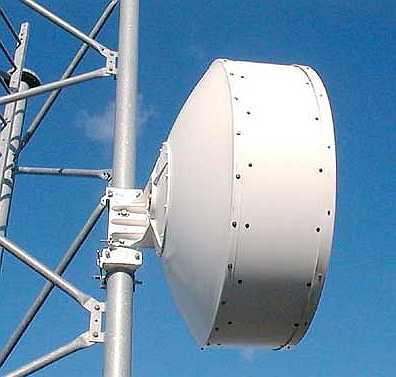
How do I choose the right type of mast or tower for my antenna array?
Read more: How do I choose the right type of mast or tower for my set of antennas?Both masts and towers are highly resistant to vertical loads. Customers often ask us whether a mast can support a specific amount of equipment (expressed in kilograms). The answer is almost always yes—because, for the structural stability of mast designs, the total lateral surface area of the installed antennas is much more important than the weight. A mast acts like a sail, generating large lift forces…
-
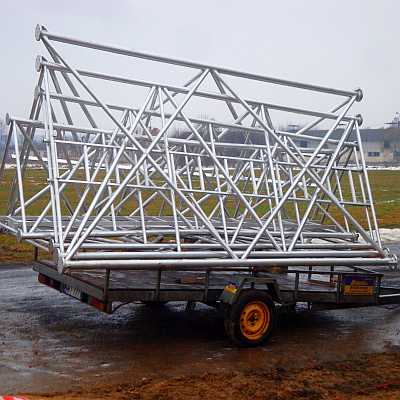
Folded or welded tower?
Read more: Folding or welded tower?Large telecommunications towers pose logistical challenges during delivery—their lower segments are spatial structures with cross-sections up to several meters wide. Most towers available on the market are hybrid solutions: the lower segments are assembled on site from individual pipes, while the upper segments are factory-welded. This approach minimizes the volume of cargo during transport, but increases the total cost…
-

What to choose - mast or tower?
Read more: What to choose - mast or tower?The main difference between masts and towers is ease of use and the amount of space required for installation. There is also an important economic aspect: towers are generally more expensive but take up significantly less space—while masts are cheaper but require a plot large enough to accommodate the entire guy wire system. Masts require periodic inspections and checks of the cable tension, and in the event that…
Latest Questions and Answers
- I'm starting a mast-building project—what do you need to know to help me?
- Cooperation with SpaceForest
- Assembly for chemical anchors - description of the technique
- How to avoid frost cracks and their consequences?
- Optimization of the height of masts for the radio link.
Question Categories
- Prices (1)
- For architects (9)
- Stage Constructions (3)
- Materials science (6)
- Metallurgy (5)
- What's new in production (2)
- Law (4)
- Questions and Answers (23)
- Radio communication (5)
- Technologie (15)